What to check before choosing a small furniture cabinet for a compact room
A small furniture cabinet can make a room feel calmer, but only if it fits the space in more than name. Compact rooms tend to have awkward constraints: a radiator that projects further than expected, a door that swings wide, a socket exactly where a sideboard would sit, or a narrow gap that looks generous until the tape measure comes out. A cabinet that is advertised as compact may still feel bulky if its depth, handles and door clearance are ignored.
The most useful approach is to treat the purchase as a measurement exercise before a style decision. Choose the finish, oak or painted surface, only after the footprint has been checked. That order keeps the choice practical and reduces the chance of a delivery day full of awkward adjustments. A small furniture cabinet works best when it solves storage needs without taking over the room.
Measure the floor space, not just the wall
Start with the width of the wall or floor area where the cabinet will stand. Measure at floor level and again at about worktop height, because walls are rarely perfectly straight. Note the skirting board depth too. A cabinet can sit in front of skirting, but it may not sit snugly against it, and that small gap matters in a tight hallway or dining room.
Check the depth as carefully as the width. Shallow cabinets are often the better fit in compact spaces, yet they can still intrude into walking routes. Mark the proposed footprint on the floor with masking tape, then walk around it. This makes it easier to see whether the cabinet will narrow a passage, block a chair pull-out space or crowd a doorway.
Vertical space deserves the same attention. Measure from the floor to any light switch, window sill, wall shelf, pendant or beam. A cabinet that stops below a switch may still prevent someone from reaching it comfortably. If the top will hold lamps, bowls or everyday items, leave enough room above for those objects and for cleaning around them.
Allow room for doors, drawers and handles
A cabinet's size is not only the size of its carcass. Doors need arc space, drawers need pull-out space and handles add projection. In a narrow room, a door that opens outward may be more troublesome than the cabinet itself. Where possible, sketch the opening direction on paper or use the taped footprint as a reference.
Sliding doors can reduce the need for side clearance, though they may give access to only part of the interior at a time. Drawers can be easier in a tight space if they open smoothly and do not catch on nearby furniture. Hinged doors usually give a clearer view of the whole storage area, but they demand more room in front and beside the cabinet.
Handles also affect the practical width. A cabinet with small knobs may fit a narrow gap more easily than one with long pulls, even when the body dimensions are the same. Rounded corners and softer edges help in busy routes, especially where people pass with bags, coats or crockery.
Check what the cabinet needs to store
Buying by appearance alone can lead to a piece that looks right but holds the wrong things. List what actually needs to be kept inside: plates, glasses, cutlery, paperwork, toys, linens, shoes or media items. Bulky objects set the real test. A sideboard with a narrow interior may look elegant but fail if it must hold large serving dishes.
Adjustable shelves add flexibility, though the positions should suit the items you expect to store. Fixed shelves can be sturdier and simpler, but they make less efficient use of odd heights. Drawers help with small items that would otherwise disappear at the back of a cupboard. A mix of open shelving and closed storage suits rooms where some objects are used daily and others are better tucked away.
Think about access as well as capacity. A cabinet under a window may be hard to reach if the sill is low. A piece beside a dining table may need to open while chairs are in use. In compact rooms, storage that is awkward to reach often ends up cluttered, so the easiest items to access should be the ones used most often.
Match the scale to the room
A compact cabinet does not have to be visually timid. In a small room, a solid oak piece can add warmth, while a painted finish can make the furniture feel lighter, particularly against pale walls. The key is proportion. A tall cabinet in a low room can feel top heavy. A long, low sideboard can stretch a narrow room visually, but only if there is enough clear wall for it to breathe.
Pay attention to the gap between the cabinet and nearby furniture. Too little space looks crowded and makes cleaning difficult. Too much space can make the piece feel isolated. A consistent gap around a cabinet often looks more deliberate than a random one. In open plan rooms, the cabinet can also act as a visual boundary, so its height should be considered from more than one viewpoint.
Light affects the final look. Oak can appear warmer under soft lighting and more golden in daylight. Painted surfaces may show shadows differently, especially beside a window. If a finish is being chosen from a sample, view it in the room where it will sit rather than relying only on a small swatch in bright light.
Read the dimensions with care
Product measurements can be easy to misread. Width, height and depth should be checked as separate figures, and the depth may include handles or door projections. A compact 80cm wide sideboard, for example, may still vary in depth, internal layout and leg design. The figure describes one dimension only, not the whole feel of the piece.
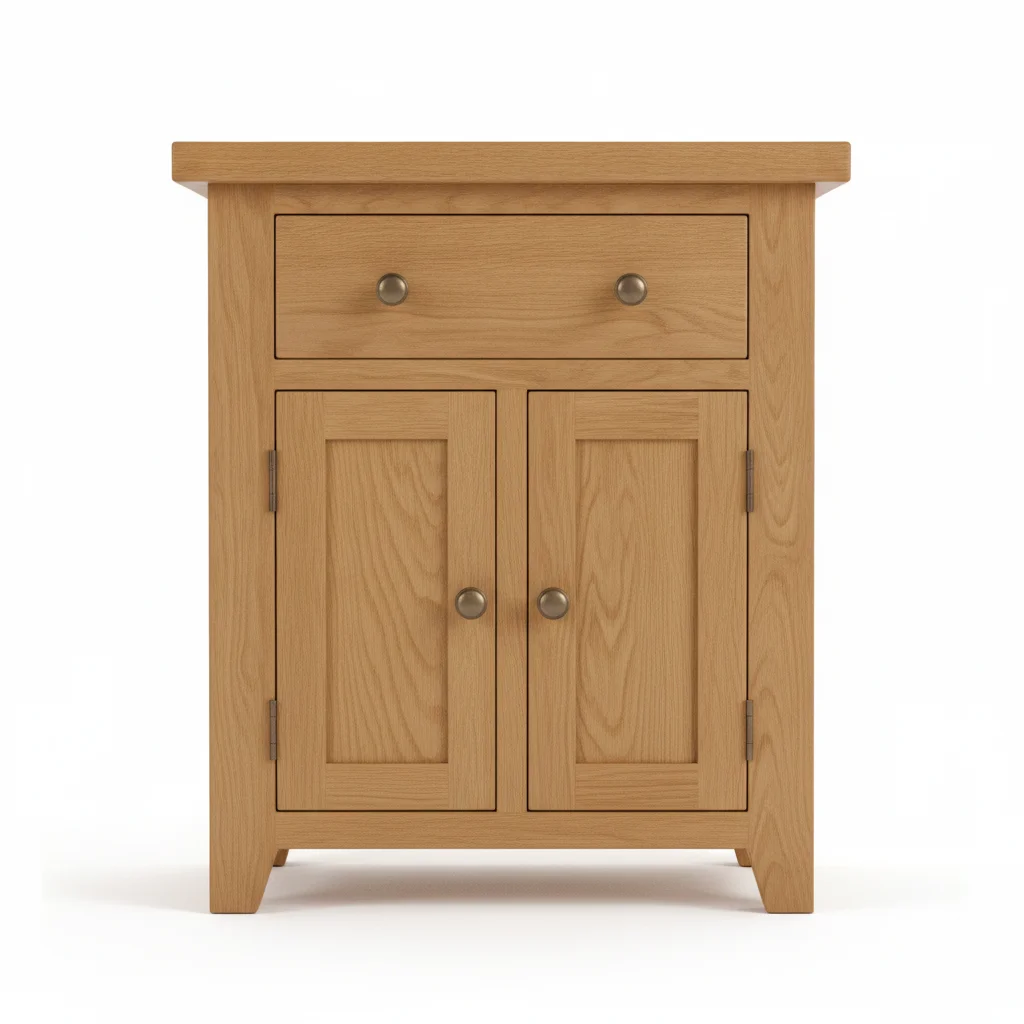
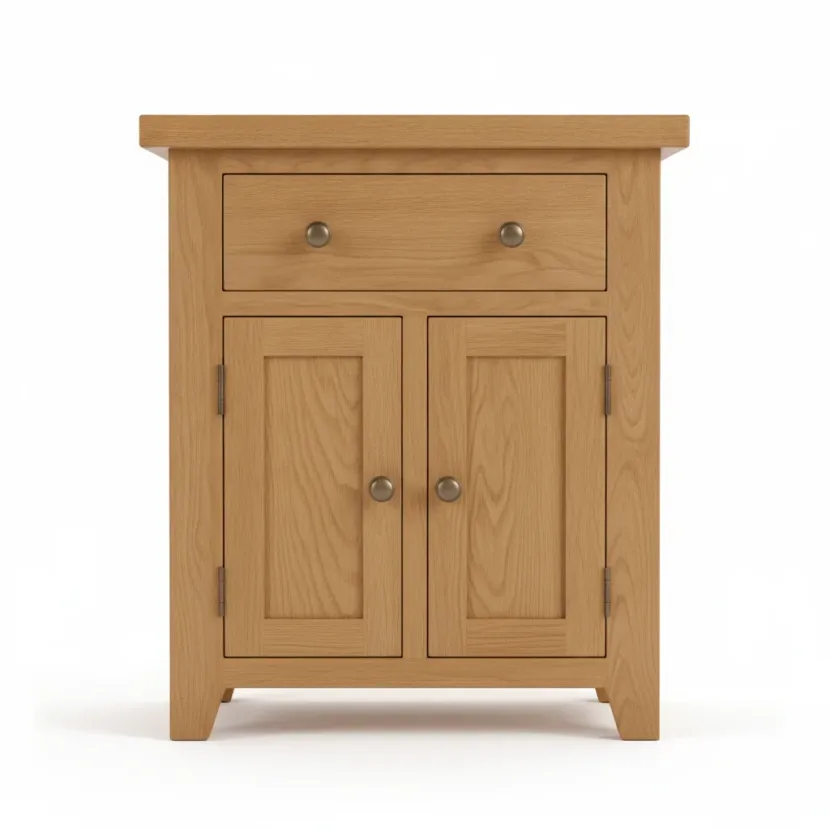
For buyers comparing options, Oak Castle Furniture sits in the compact 80cm wide solid oak and painted sideboards and cabinets category, where width is a useful starting point but not the only useful number. Depth, height and opening clearance still decide whether the cabinet suits the room. Measurements should be written down and compared with the taped floor area before a final choice is made.
When looking at oakcastlefurniture.co.uk, treat the listed dimensions as a starting point and place them alongside your own room measurements. A cabinet that is only a few centimetres narrower can make a real difference in a tight space, but a deeper body can undo that gain. Compare like with like, including overall size, usable interior space and any projection from handles or feet.
Plan the route into the room
Even a perfectly sized cabinet can cause trouble if it cannot reach its final position. Check doorways, internal doors, hallway turns and stairs. Measure the narrowest point, not simply the front door. Think about diagonal turns, where a wide item may need to be tilted to pass through a doorway or around a landing.
Remove obvious obstacles from the route where possible, such as loose mats or small objects on the floor. Protect walls and floors at tight corners with soft blankets or cardboard. If the piece has legs or a delicate finish, check how it is likely to be handled before it enters the room. A large item should not be forced past a fixed obstruction, as damage to the cabinet or the property can follow.
Some homes have genuinely difficult access, especially older properties with narrow stairs or sharp turns. In those cases, a smaller cabinet, a flatter packed design or a piece with removable parts may be more realistic. The decision should be based on the building itself rather than the hope that a tight turn will work out on the day.
Think about stability and daily use
A cabinet in a compact room often gets used heavily. Doors are opened in a hurry, books are stacked on top and bags are dropped nearby. Check that the base sits evenly on the floor and that the piece will not wobble when drawers are opened. Uneven floors are common, so a small adjustment under the feet may be needed. Follow the maker's guidance for any levelling steps and avoid forcing fittings.
Consider what will sit on top. A cabinet may be intended for storage only, yet in a small room it often becomes a landing place for keys, lamps or plants. Leave space for these items without covering the whole surface. If the cabinet will sit near a busy entrance, choose a finish and shape that suits frequent use rather than one that needs constant attention.
Safety belongs in this part of the decision too. Cabinets can tip if overloaded at the top or pulled by children, so use fixing points where supplied and appropriate for the wall type. If a wall is unusual, hollow, crumbling or uncertain, ask a qualified professional before drilling or fixing. Electrical sockets and cables should not be trapped behind a cabinet, and no furniture should cover a vent or access point that needs airflow.
Balance storage, access and appearance
The right small furniture cabinet is rarely the one with the largest capacity on paper. It is the one that fits the room, opens without fuss, holds the items that matter and looks settled in its position. Measure the footprint, check the opening space, compare internal layout and think about the route into the room. Those checks are more useful than choosing by width alone.
Before committing, revisit the taped area and imagine an ordinary week of use. Will the door open fully? Can the drawers be used with someone standing nearby? Does the top leave enough room for daily items? Can the cabinet be cleaned around without moving it? If the answers are practical, the final decision becomes much easier, and the cabinet is more likely to feel like a natural part of the room rather than a piece squeezed into whatever space was left.